
Start Your Gluten-Free Sourdough Journey
Learn how to start and bake with a gluten-free sourdough starter – even if your first loaves never worked before.
Gluten-free sourdough behaves differently from wheat sourdough, and many beginners struggle to keep their starter alive.
I bake in Estonia – a small northern country with a cool and humid climate where warm days are short and kitchens are rarely perfect for fermentation. Yet even here I have managed to keep my gluten-free starter alive, revive it after it seemed almost lifeless, and bake rustic one-kilogram loaves.
If a gluten-free sourdough starter can thrive here, it can thrive in your kitchen too. I’m not here to show perfect blog conditions, but how gluten-free sourdough really works in an everyday kitchen.
And when people say a sourdough starter must behave in a certain way, I like to remind them that every starter has its own character. Its behavior isn’t always predictable, but a good partnership is still possible.
Video tutorial and some important notes
I’m fortunate to use water from a deep well, drawn from underground layers. It is clean, neutral in taste and smell — truly ideal for baking. I simply turn on the tap and use it as it is. There is no single formula I can give you to ensure “perfect water,” as water composition varies greatly depending on location. You can use bottled spring water if needed, although it is not the most sustainable option.
Filtered water is often a very good choice, especially if it removes chlorine while still retaining some natural minerals. However, highly purified water (such as reverse osmosis water) may be too low in minerals to support optimal fermentation unless minerals are added back. If you are using tap water, both letting it sit uncovered for several hours or overnight, or boiling and cooling it, can help reduce chlorine, which may otherwise interfere with fermentation.
Boiling does not harm fermentation, but it is usually not necessary unless your water has a strong chlorine smell. Letting the water rest is often a gentler and sufficient approach. What matters most is that your water is clean, not overly chlorinated, and contains some natural minerals. Ultimately, you are the best judge of your own water — and with a bit of attention, you will quickly learn what works best in your kitchen.
And then there is the endless debate — should you weigh your flour and water precisely in grams, or is it enough to go by eye when creating and maintaining a sourdough starter? I personally prefer using a scale, because it allows me to always know the exact ratio of flour to water. This makes my starter more consistent and predictable. That said, if you enjoy using measuring cups or simply adjusting by eye to reach the right consistency, that is perfectly fine too. The choice is yours.
Wash your tools using only hot water. Yes, we need a clean jar and clean utensils (a spoon or spatula), but they do not need to be sterilized. Although I use gentle, eco-friendly dishwashing liquids in my daily life, I always wash my sourdough jar and tools with hot water only. I simply prefer to avoid any possibility of detergent residue remaining on the surface, as it may negatively affect the health of my starter.
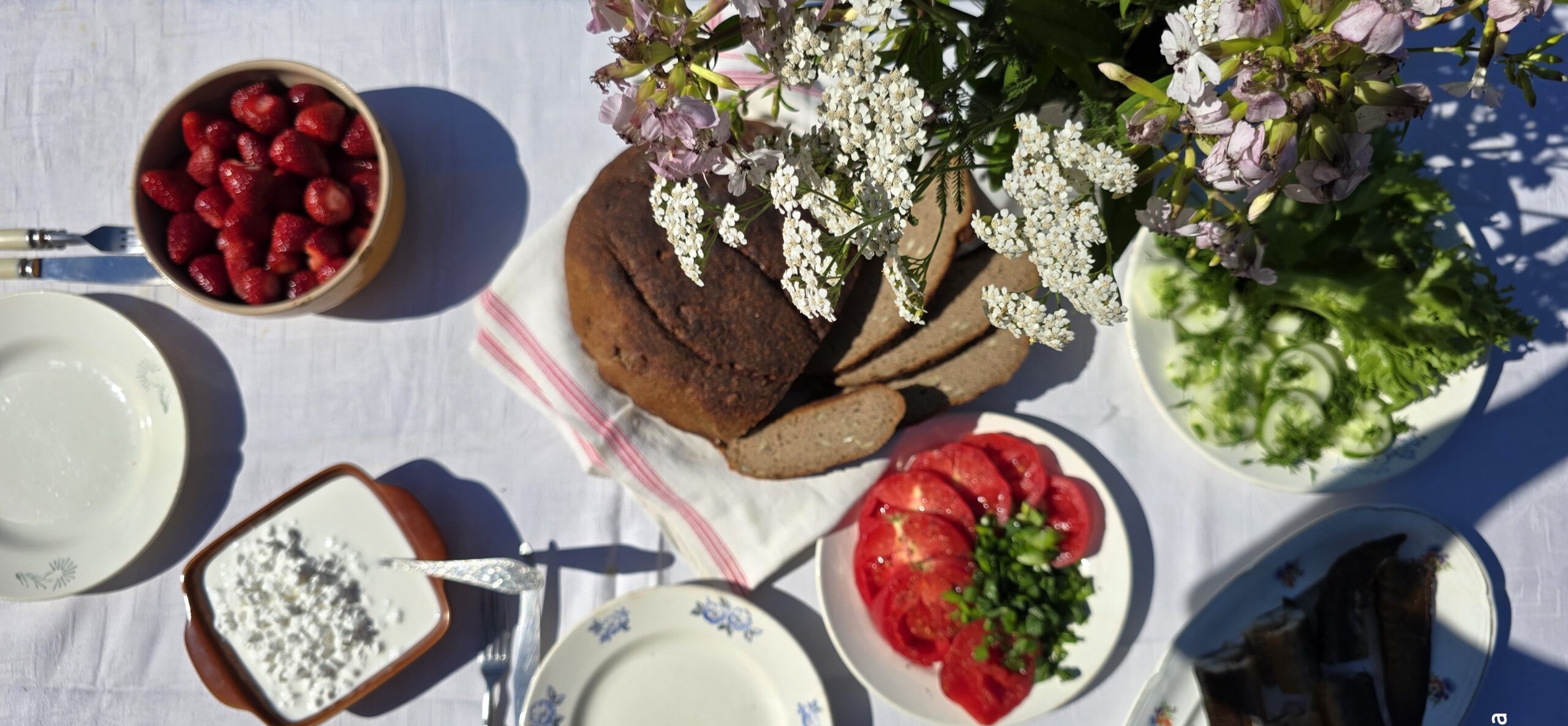
And last but not least — the bread you see at the end of this video tutorial is made with the same young starter you’ve just followed throughout the process. However, that dark, rye-style loaf… that’s a different story. If you’d like to be the first to know when I reveal how to achieve this kind of deep, dark bread, simply leave your contact details in the form below.
Be the first to know when my rye-style gluten-free sourdough bread method is released.

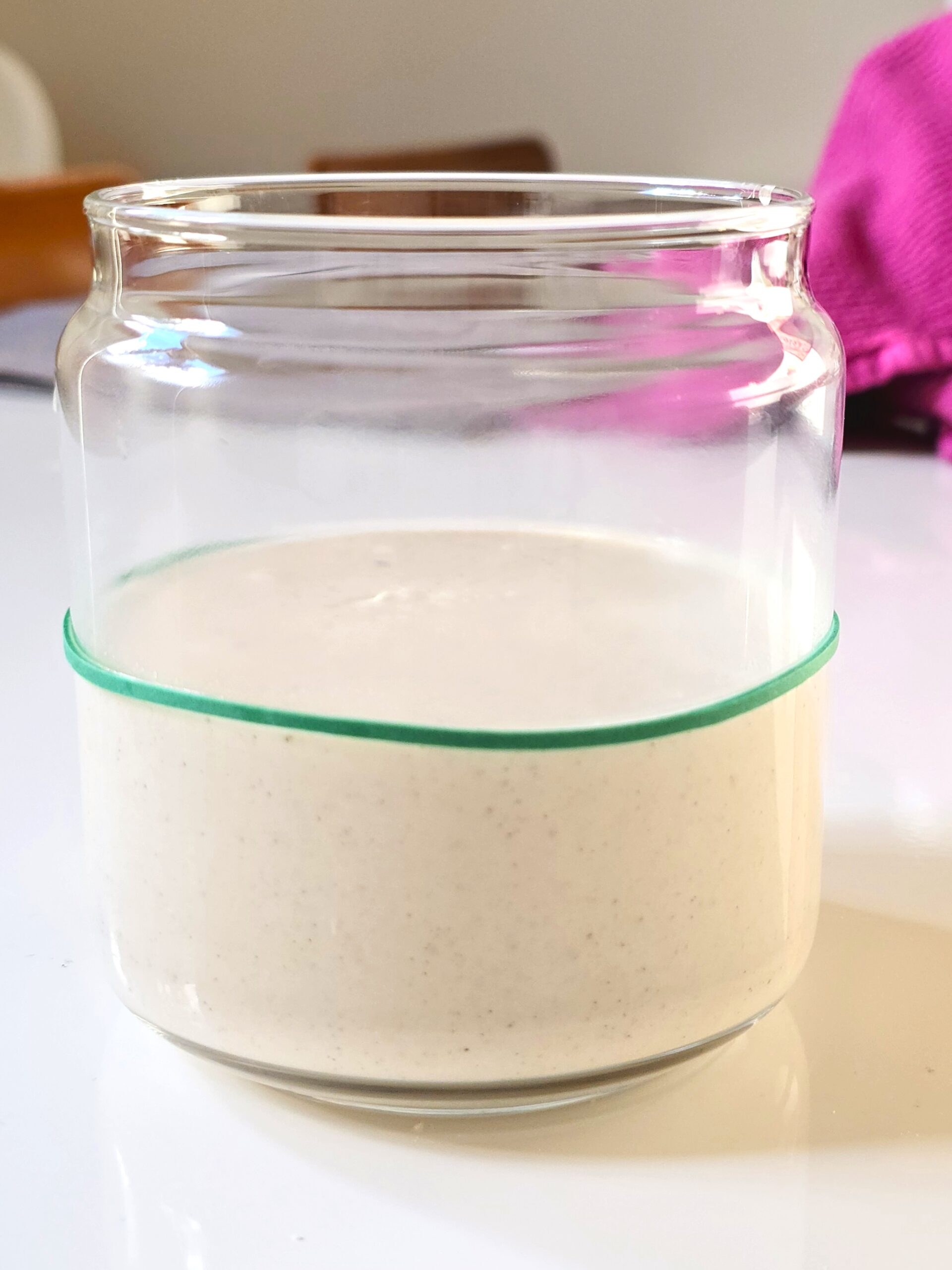
Freshly fed gluten-free sourdough starter — before it becomes active and bubbly.
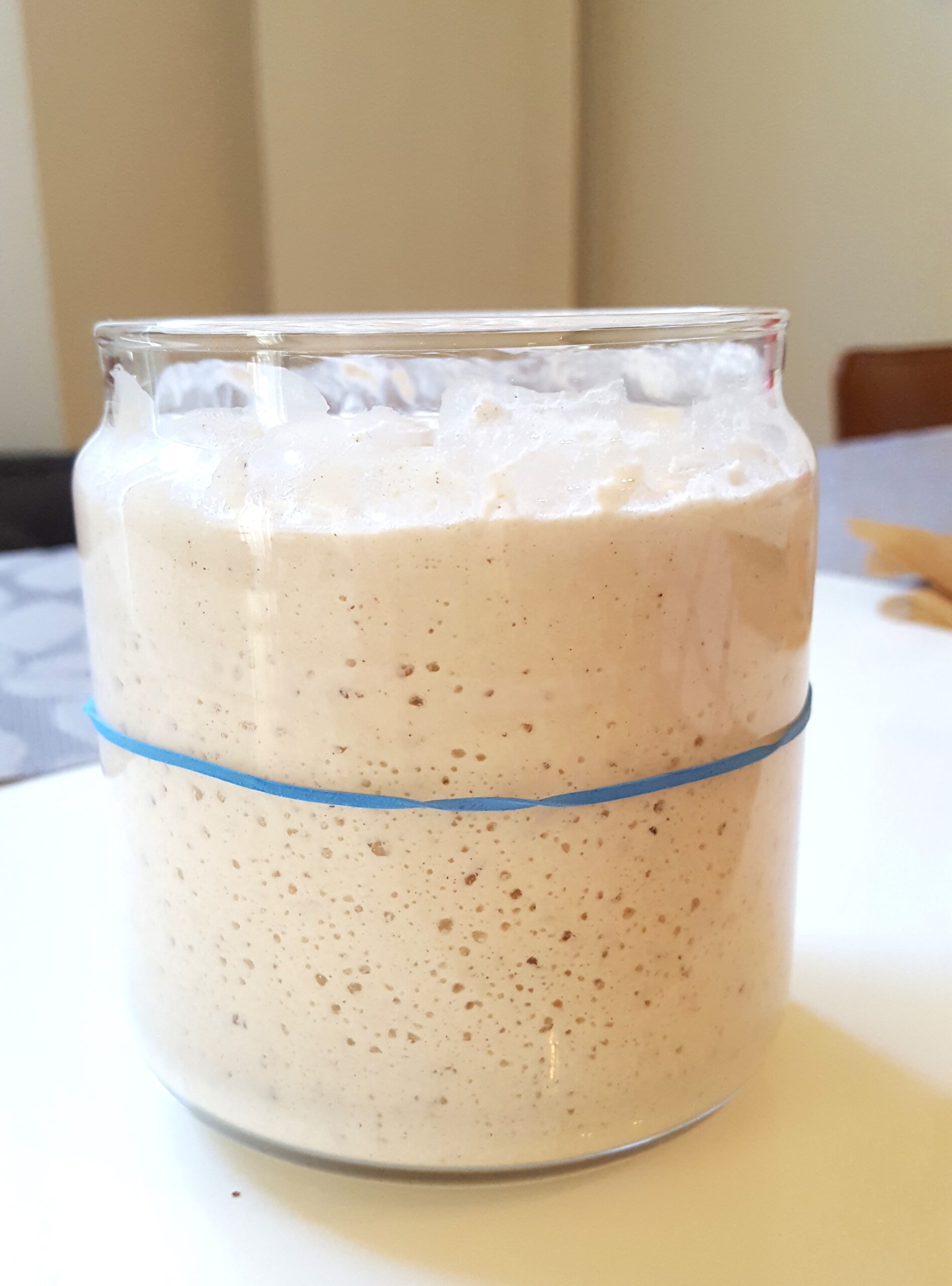
4–6 hours after feeding: the starter is active, bubbly, and ready to use.
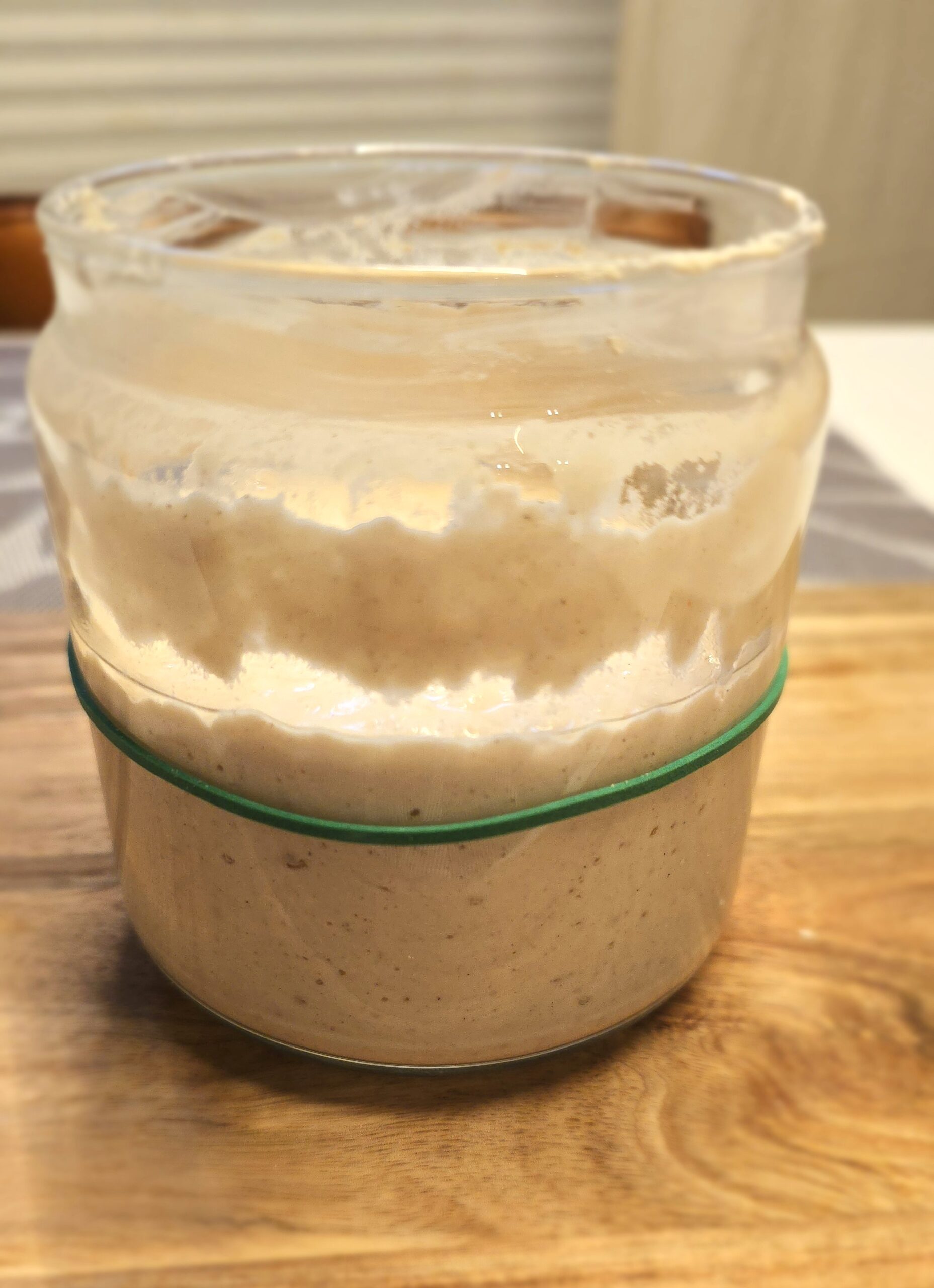
The starter has collapsed and needs to be fed again before using.